Armco Barrier Systems: Complete Guide to Industrial Safety Barriers
Armco barrier systems are one of the most widely used safety solutions for protecting buildings, equipment, and people in industrial and commercial environments. Designed to absorb and deflect vehicle impact, these systems are essential for managing traffic flow and reducing damage in high-risk areas such as warehouses, car parks, and loading bays.
This guide explains everything you need to know about Armco crash barriers, including how they work, the different components involved, and how to choose the right setup for your site.
What Is an Armco Barrier System?
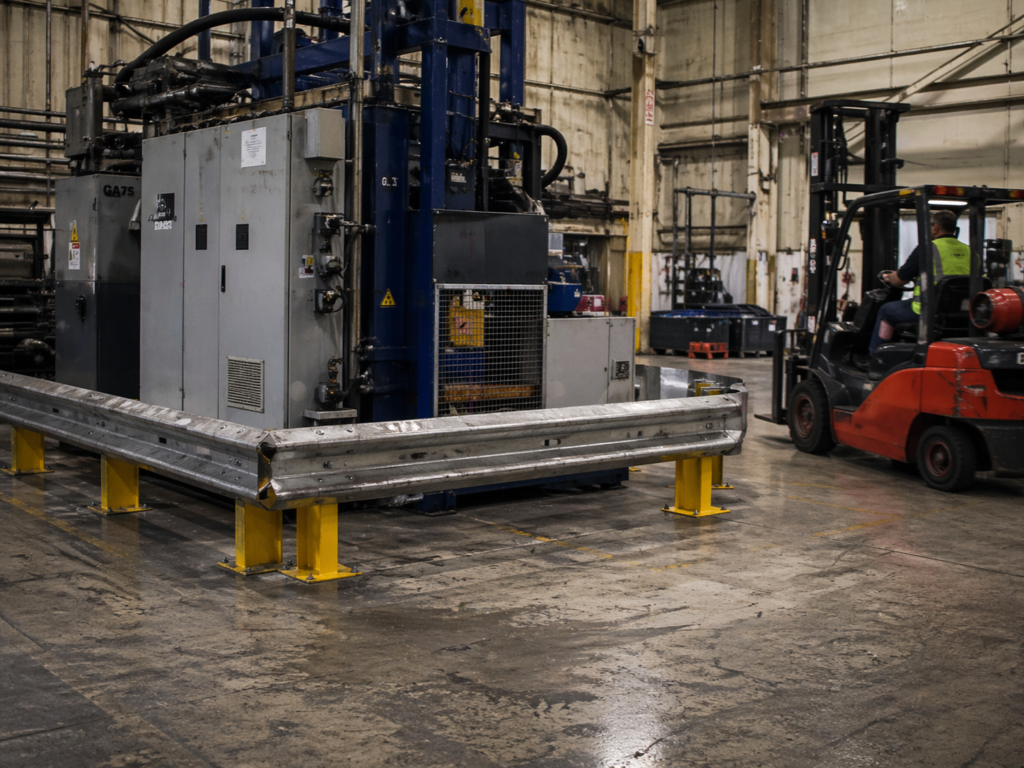

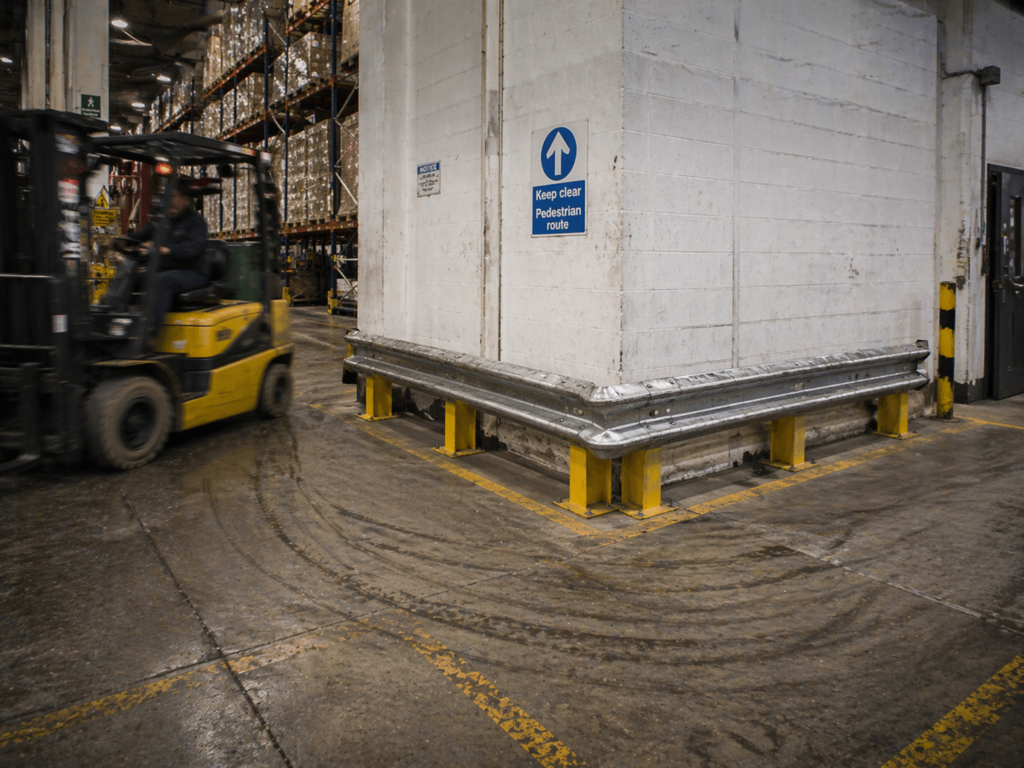
An Armco barrier system is a steel safety barrier designed to:
- Absorb impact from vehicles
- Protect infrastructure such as walls, racking, and machinery
- Separate vehicles from pedestrian areas
- Guide traffic safely through a site
The corrugated steel design allows the barrier to flex under pressure, reducing the force of impact and minimising damage.
Key Components of an Armco Barrier System
A complete system is made up of several essential parts:
1. Barrier Rails
These form the main protective run of your system.
- 1.6m Armco Barrier Galv/Yellow
- 3.2m Armco Barrier Galv/Yellow
- 1.6m = more flexible layouts
- 3.2m = fewer joins, faster installs
2. Support Posts
Posts provide structural strength and determine how impact is absorbed
- RSJ posts = maximum strength
- Z posts = lighter, space-efficient
3. Fixings & Installation Hardware
These hold the entire system together. Without the right fixings, the barrier won’t perform properly
Each plays a role:
- Lap bolts → connect rails
- Post bolts → connect rails to posts
- Anchor bolts → secure posts to ground
4. Barrier Ends & Corners
These finish the system safely and eliminate exposed edges.
These finish the system safely and prevent exposed edges.
5. Visibility & Protection Upgrades
These improve awareness and reduce long-term damage.
These reduce collisions and extend the lifespan of your system.
Where Armco Barriers Are Used
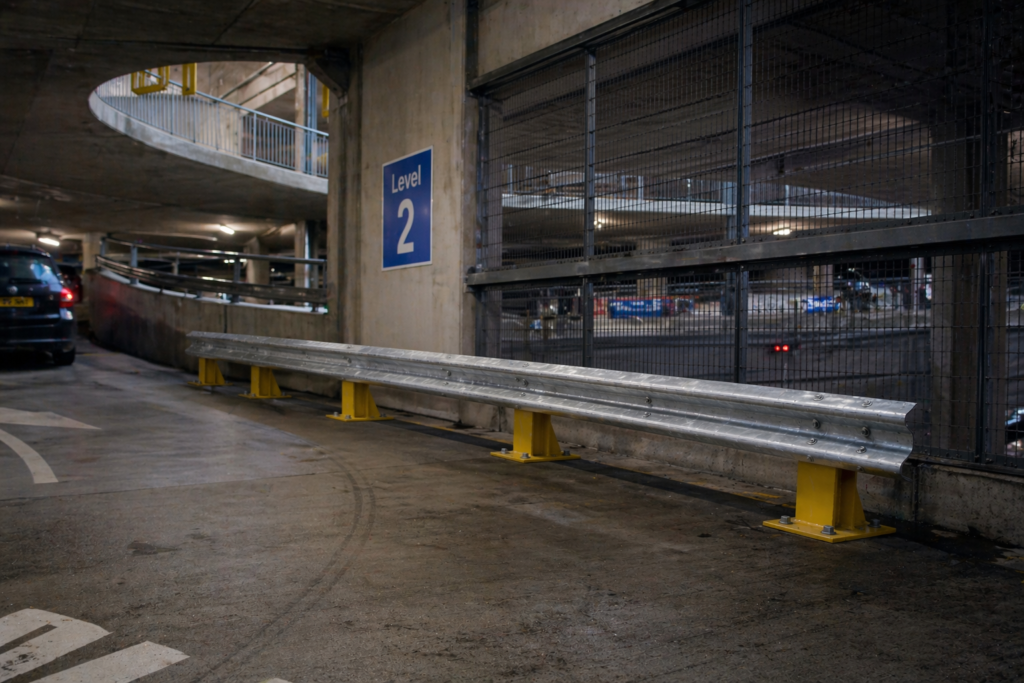
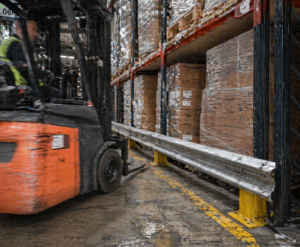
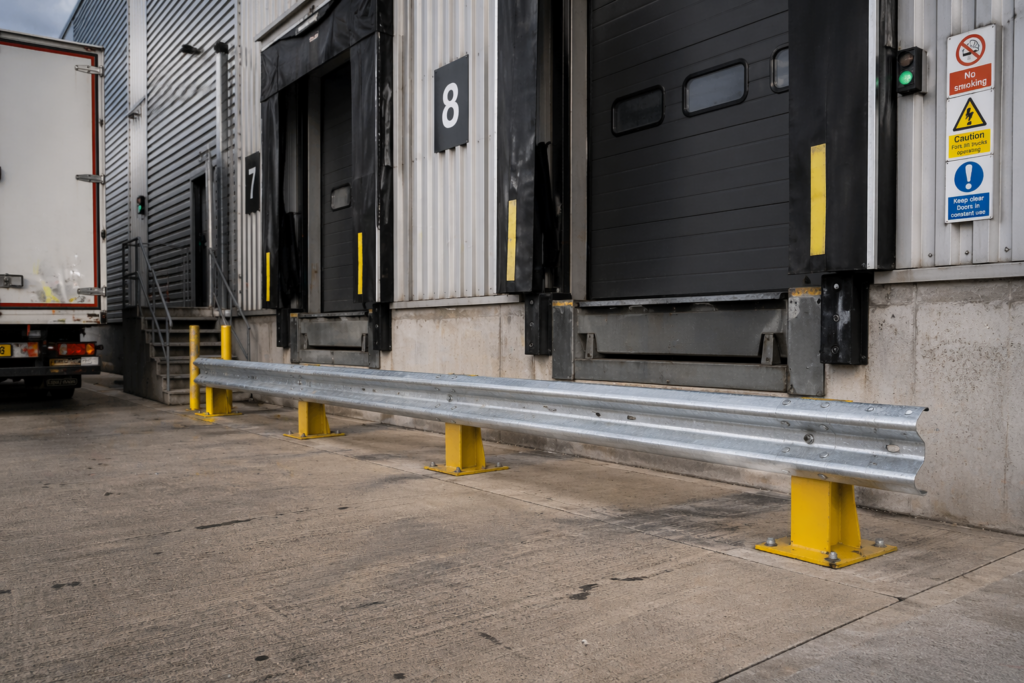
Armco systems are used in:
- Warehouses and distribution centres
- Car parks and multi-storey parking
- Loading bays and service yards
- Factories and manufacturing facilities
- Retail and commercial premises
They are particularly effective in environments with:
- Forklift traffic
- Delivery vehicles
- Tight manoeuvring areas
How to Choose the Right Armco Barrier System
Choosing the correct setup depends on your environment.
1.) Choose Barrier Length
- 1.6m → more flexibility, easier adjustments
- 3.2m → fewer joints, faster installation
2.) Choose Post Type
3.) Choose Installation Method
- Surface mounted → quicker install
- Dig-in posts → maximum stability
4.) Add Safety Enhancements
- Reflectors → improve visibility
- Sleeves → reduce wear and damage
- End caps → improve safety compliance
Why Armco Barriers Are So Effective
Armco barriers are designed to:
- Absorb and redistribute impact force
- Prevent structural damage
- Reduce repair costs
- Improve workplace safety
Compared to unprotected environments, they significantly lower the risk of:
- Vehicle damage
- Infrastructure damage
- Workplace accidents
Complete System vs Individual Components
You can either:
- Buy individual parts and build your system
OR
- Use a complete solution such as an Armco Barrier Calculator. This allows you to configure everything in one place.
Common Mistakes to Avoid
Most buyers get this wrong:
- Choosing the wrong post type
- Skipping safety ends
- Not using enough fixings
- Ignoring visibility upgrades
These mistakes lead to reduced performance + higher long-term costs
Build a Safer, More Efficient Site
Armco barrier systems provide a proven solution for protecting people, infrastructure, and vehicles in high-risk environments. By selecting the right components and installing them correctly, you can create a system that delivers long-term safety, durability, and cost savings.