Common Warehouse Safety Hazards (And How To Prevent Them)
Warehouse environments are fast-paced operational spaces where forklifts, pallet trucks, racking systems, loading bays, and pedestrian walkways all operate close together. Without the correct safety measures in place, even small mistakes can lead to costly accidents, damaged infrastructure, operational downtime, and serious injuries.
Understanding the most common warehouse safety hazards is essential for improving site safety, protecting staff, and reducing long-term repair and maintenance costs.
Forklift Collisions
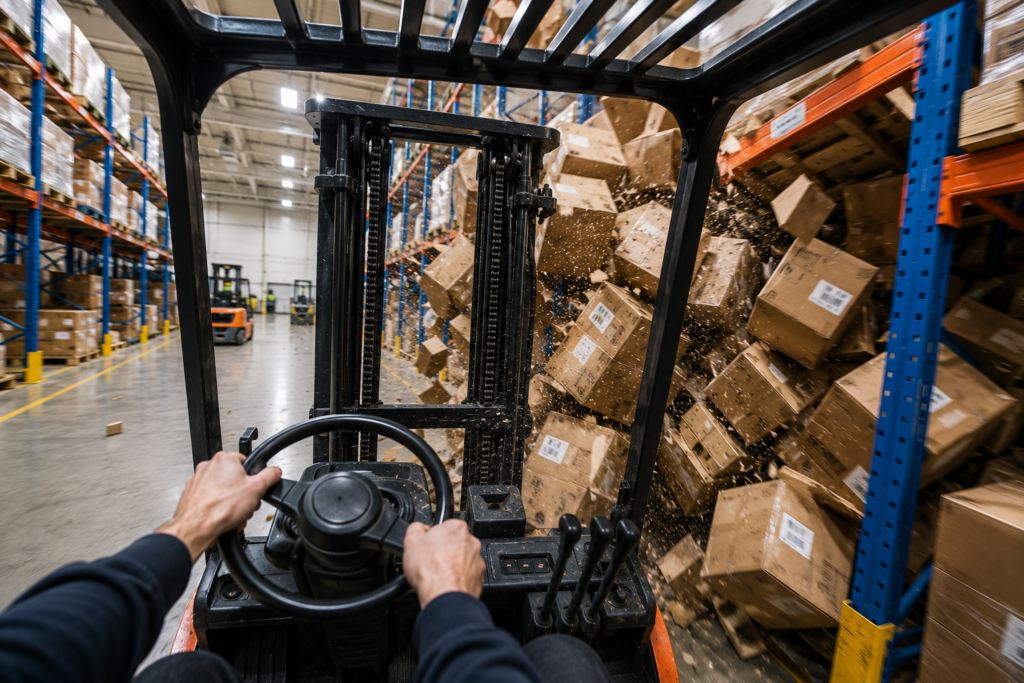
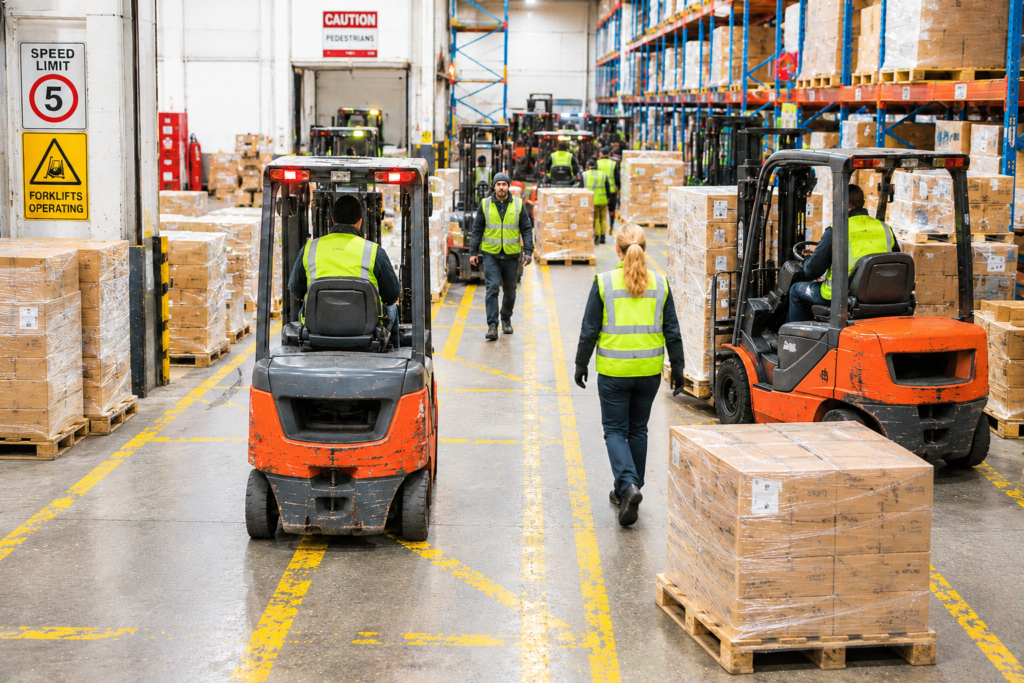
Forklift traffic is one of the biggest safety risks inside warehouses. Poor visibility, tight manoeuvring areas, blind corners, and shared pedestrian routes can all increase the risk of vehicle collisions.
Installing Armco barriers, pedestrian guardrails, and high-visibility protection systems helps create clear separation between vehicles and people while protecting infrastructure from accidental impact damage.
Damaged Warehouse Racking
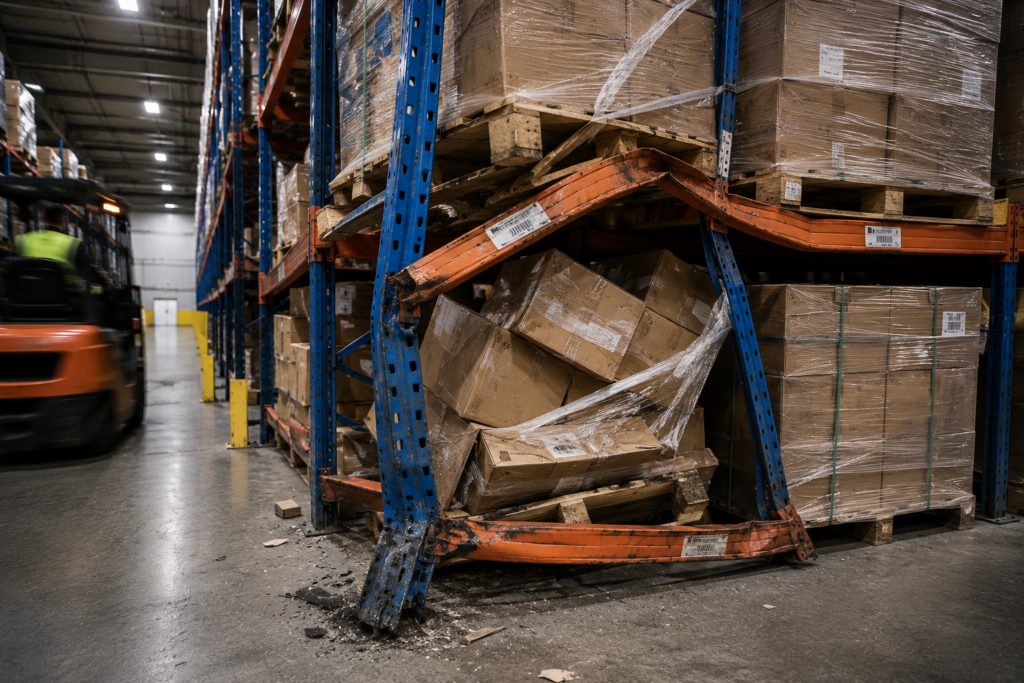
Warehouse racking is highly vulnerable to forklift impact, especially in narrow aisles, busy storage zones, and loading areas where manoeuvring space is limited. Even low-speed collisions can weaken structural integrity, damage stock, and increase the risk of rack collapse over time.
Installing safety barriers and rack protection systems around pallet racking helps reduce accidental impact damage while improving visibility, traffic organisation, and operational awareness throughout the warehouse.
Loading Bay Accidents
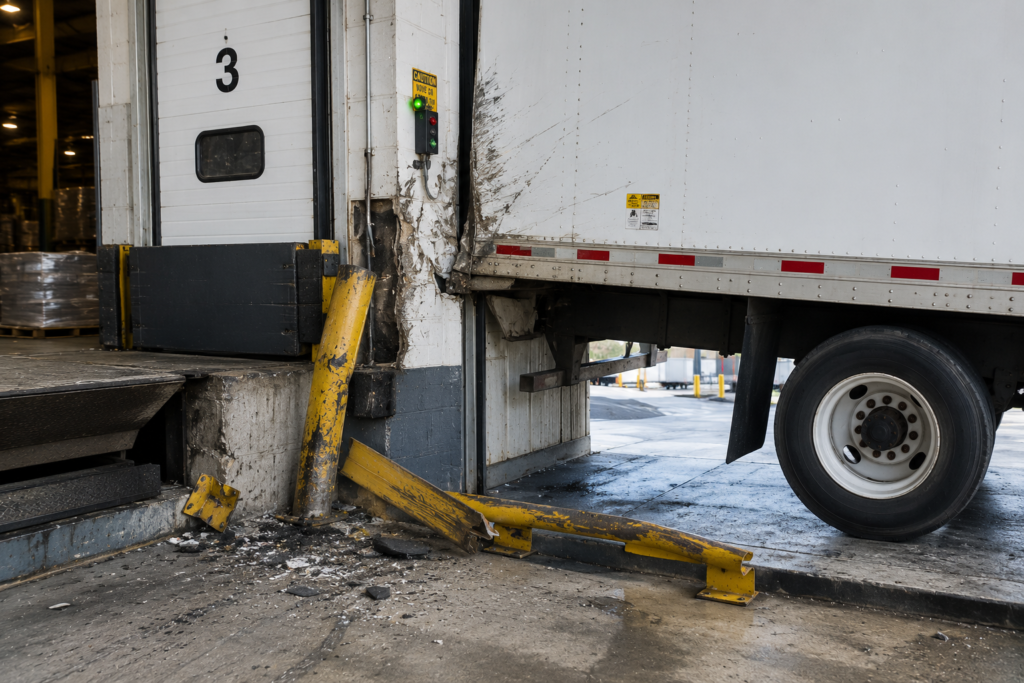
Loading bays are high-risk operational areas where reversing vehicles, forklifts, pallet trucks, and delivery traffic constantly move through confined spaces. Poor visibility and limited manoeuvring space can significantly increase the risk of collisions and accidental impact damage.
Installing safety barriers near loading bays, roller shutter doors, dock levellers, and service areas helps improve visibility while protecting infrastructure, equipment, and operational zones from accidental vehicle impact. High-visibility barrier systems also help improve traffic organisation and create safer routes for both vehicles and pedestrians.
Poor Traffic Organisation
Disorganised warehouse layouts often lead to congestion, blocked walkways, reduced visibility, and unsafe vehicle movement. When pedestrians, forklifts, and delivery traffic operate too closely together, the risk of accidents and operational disruption increases significantly.
Using Armco barriers, bollards, pedestrian guardrails, and traffic separation systems helps improve warehouse traffic management while creating safer operational routes throughout the facility. These systems also help improve visibility, guide vehicle movement, and create clearer pedestrian walkways.
Insufficient Visibility
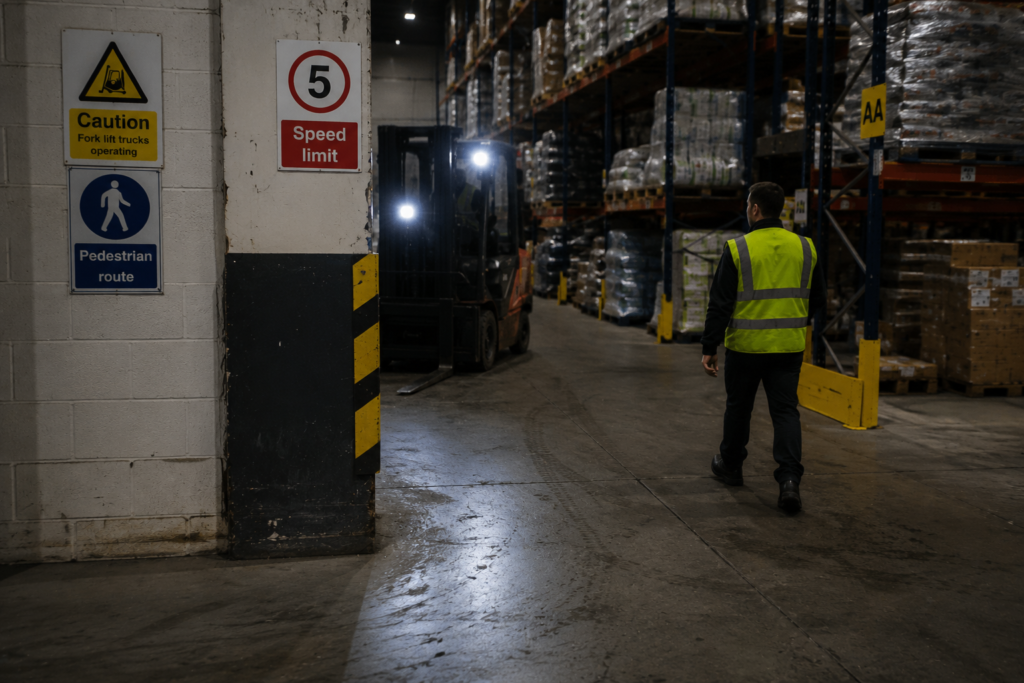
Low visibility is a major cause of workplace accidents in warehouses and industrial facilities. Blind corners, poor lighting, obstructed views, and unclear traffic routes can all increase the likelihood of collisions involving forklifts, vehicles, and pedestrians.
High-visibility yellow barrier systems, reflective safety products, and clearly defined pedestrian routes help improve awareness for both vehicle operators and warehouse staff. These systems also help create clearer traffic flow while improving overall safety throughout busy operational environments.
How To Improve Warehouse Safety
Improving warehouse safety starts with identifying high-risk operational areas and installing the correct protection systems for your environment.
Common warehouse safety solutions include:
When combined correctly, these systems help improve traffic organisation, reduce accidents, and create safer warehouse environments for both pedestrians and vehicles.