How To Create Safer Forklift Routes
Forklift routes play a major role in warehouse safety, operational efficiency, and traffic management. In busy warehouses and industrial facilities, poorly planned vehicle routes can quickly lead to congestion, blind corners, restricted visibility, and dangerous interactions between forklifts and pedestrians.
Creating clearly defined forklift routes helps reduce collisions, improve traffic flow, and create safer operational environments for warehouse staff, vehicle operators, and visitors.
Separate Forklifts From Pedestrian Walkways
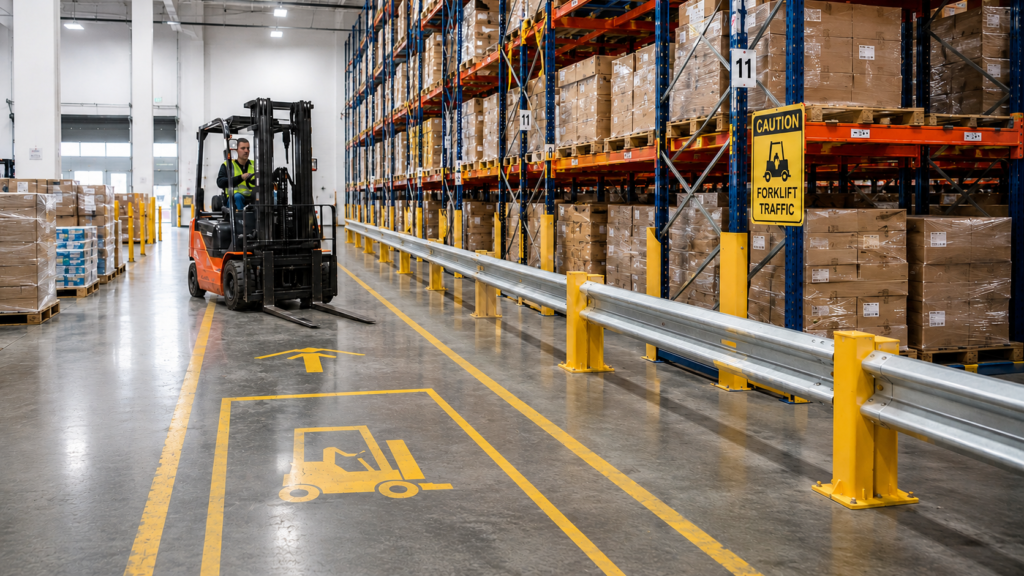
One of the most effective ways to improve warehouse safety is by creating clear separation between vehicle routes and pedestrian areas. Shared operational spaces significantly increase the risk of accidents, especially in high-traffic environments where forklifts frequently move pallets, stock, and equipment throughout the facility.
Installing Pedestrian Guardrails, Armco Barriers, and traffic separation systems alongside walkways helps create safer pedestrian routes while improving visibility for forklift operators. Clearly defined walkways also help improve overall warehouse organisation and operational awareness.
Improve Visibility Around Blind Corners
Blind corners are one of the most common causes of forklift collisions inside warehouses. Poor visibility in narrow aisles, storage areas, and busy operational routes can make it difficult for vehicle operators to react quickly to pedestrians, equipment, or approaching traffic.
Using high-visibility yellow Armco barriers, safety mirrors, floor markings, and clearly defined traffic lanes helps improve awareness throughout the warehouse. Wider turning areas and better route planning can also help reduce sudden manoeuvres and congestion in high-risk areas.
Create Clear Traffic Flow Throughout The Warehouse
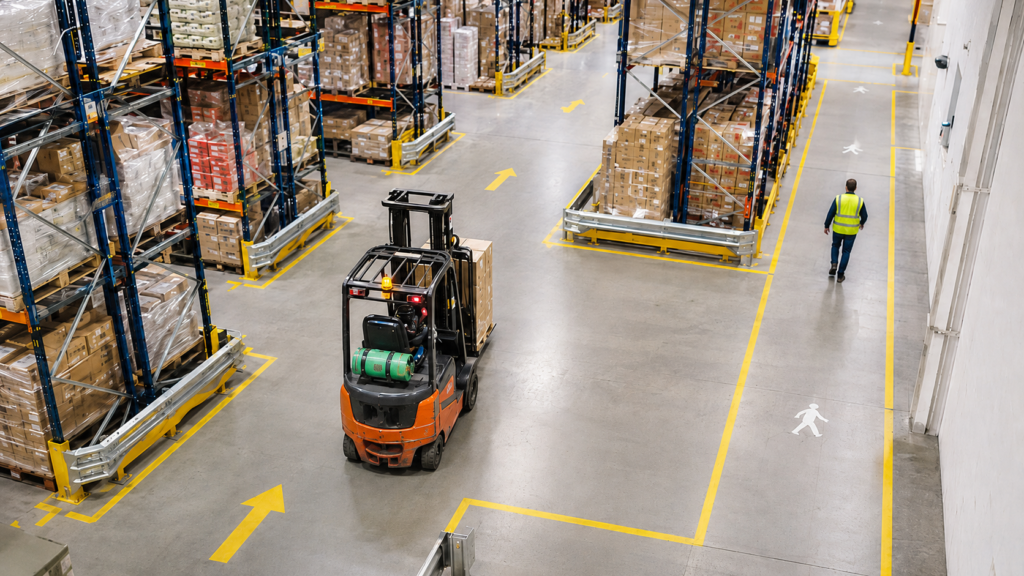
Disorganised vehicle movement often leads to blocked routes, operational delays, and unsafe traffic conditions. Creating dedicated forklift routes throughout the warehouse helps improve efficiency while reducing confusion for both drivers and pedestrians.
Many facilities use Armco Barrier Systems, Bollards, and warehouse protection barriers to guide traffic safely around pallet racking, loading bays, machinery zones, and storage areas. This helps create more controlled vehicle movement while reducing accidental impact damage throughout the site.
Protect High-Risk Operational Areas
Certain warehouse areas experience significantly higher levels of vehicle traffic and impact risk than others. Loading bays, pallet racking ends, roller shutter doors, warehouse corners, and structural columns are all common impact zones where additional protection may be required.
Installing Armco Barriers, RSJ Posts, and impact protection systems around these vulnerable areas helps reduce repair costs while improving long-term operational safety. High-visibility protection systems also help forklift operators identify restricted areas more easily in busy warehouse environments.
Use High-Visibility Safety Systems
Visibility is essential for maintaining safe forklift routes. Poor lighting, unclear traffic systems, and obstructed operational areas can all increase the likelihood of workplace accidents and vehicle collisions.
High-visibility yellow barriers, reflective safety products, and clearly marked vehicle lanes help improve traffic awareness while making forklift routes easier to follow throughout the warehouse. Combining visual guidance with physical protection systems creates a safer and more organised working environment.