Armco Barrier End Guide: Which End Section Should You Use?
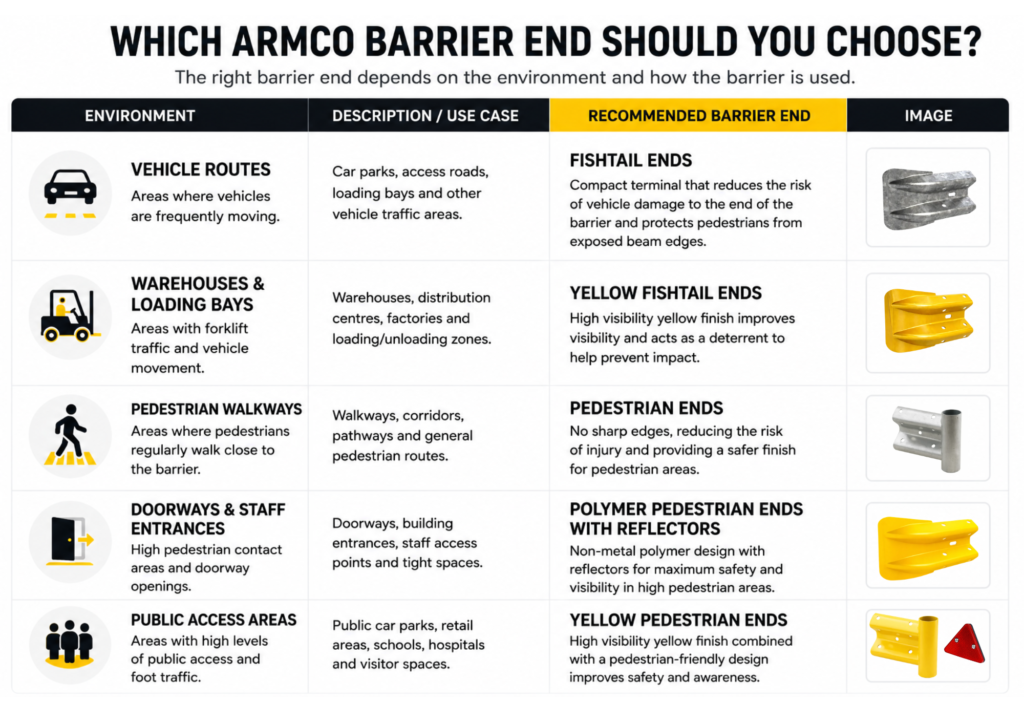
Armco barrier ends are designed to safely terminate crash barrier systems while improving visibility, reducing exposed edges, and creating cleaner installations.
Choosing the correct barrier end section is important for both safety and layout performance, particularly in environments where pedestrians, forklifts, and vehicles operate close to barrier systems.
Armco barrier ends are commonly used to:
- Reduce exposed barrier edges
- Improve pedestrian safety
- Create cleaner barrier layouts
- Improve visibility in operational areas
- Complete barrier installations professionally
For complete barrier systems, Armco end sections are often installed alongside:
- Armco Barriers
- RSJ Posts
- Z Posts
- Barrier Fixings
- Armco Corners
This creates a complete industrial safety barrier system designed for both vehicle protection and pedestrian safety.
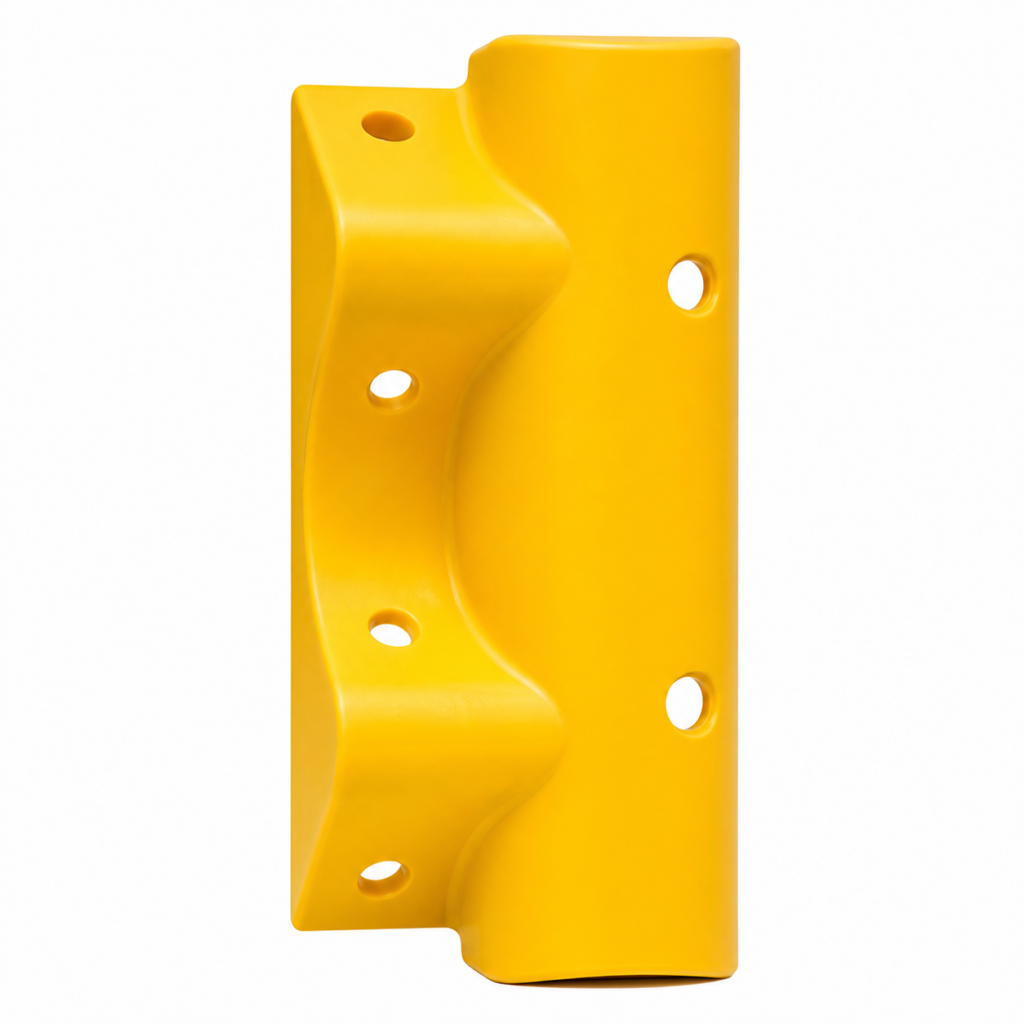
Armco Safety Ends
Armco safety ends are designed to create a safer and smoother finish at the end of a crash barrier system.
They are commonly installed in warehouses, car parks, public access areas, and industrial environments where visibility and pedestrian safety are important.
Advantages
- Safer barrier termination
- High-visibility finish
- Cleaner installation appearance
- Ideal for high-traffic areas
Potential Limitations
- Larger than fishtail ends
- Typically more expensive than standard end sections
Armco Pedestrian Ends
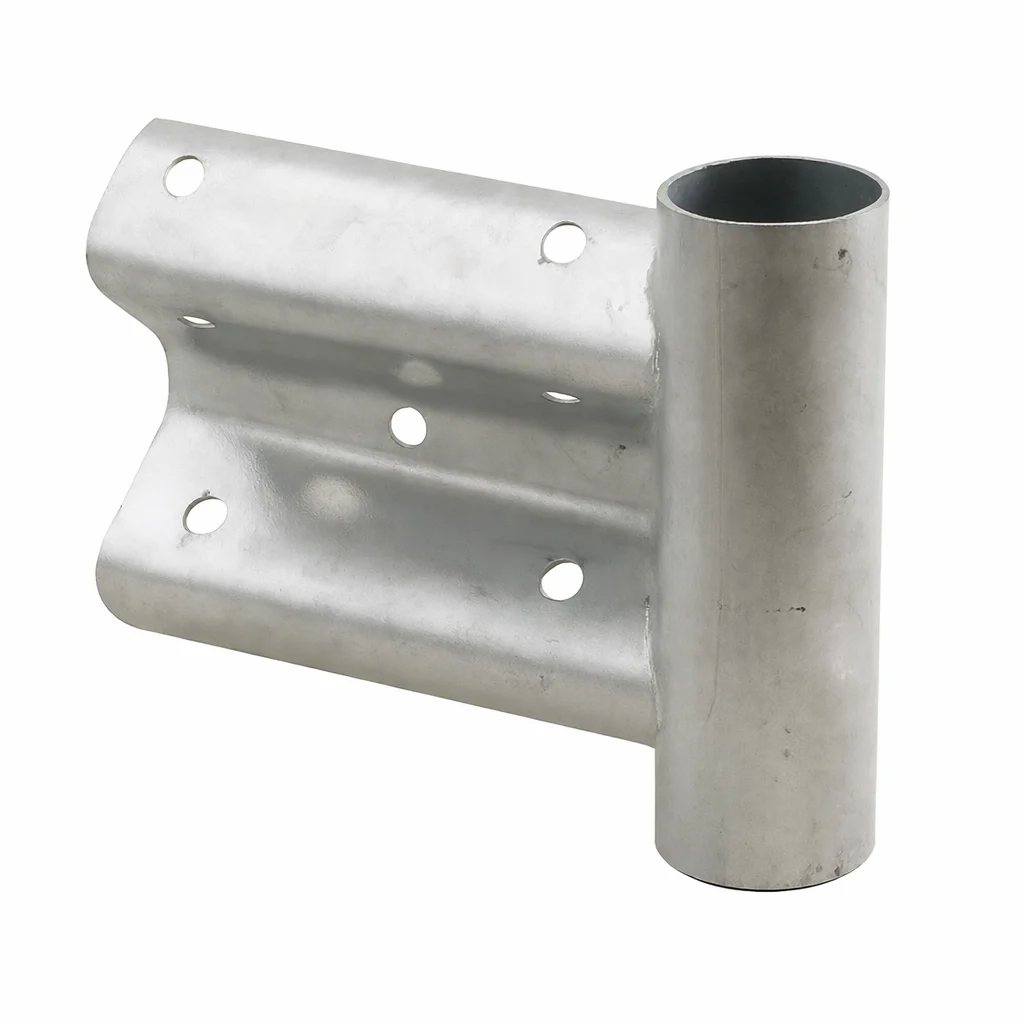
Armco pedestrian ends are designed for areas where pedestrians regularly move near barrier systems.
They are commonly used in warehouse walkways, loading bays, public access areas, and pedestrian routes where reducing exposed edges is important.
Advantages
- More pedestrian-friendly design
- Improved safety near walkways
- High-visibility finish
- Cleaner barrier appearance
Potential Limitations
- Not always necessary for low-traffic areas
- Larger than standard fishtail ends
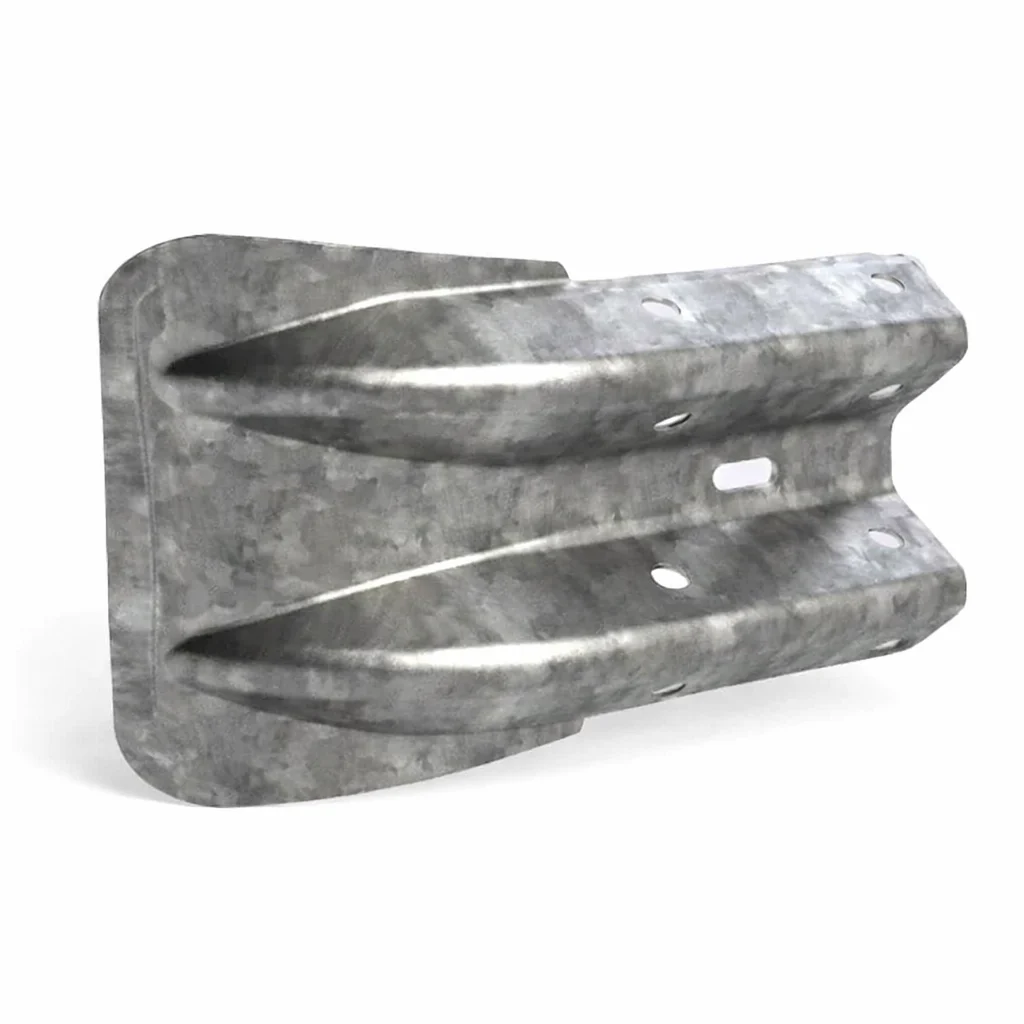
Armco Fishtail Ends
Fishtail ends are one of the most common Armco barrier end types used across industrial and commercial installations.
Their tapered design provides a compact and cost-effective way to finish barrier runs while maintaining continuous protection.
They are commonly installed in warehouses, vehicle routes, industrial sites, and perimeter barrier systems.
Advantages
- Compact design
- Cost-effective solution
- Simple installation
- Ideal for long barrier runs
Potential Limitations
- Less pedestrian-friendly than safety ends
- Reduced visibility compared to yellow safety systems